

Christian Bables (Dungwen) and Rafa Siguion-Reyna (Higante) | Photo by Hazel Orencio
LOS ANGELES – A surprise new film by Lav Diaz, “Makikiraan Po (Let Us Through, Dear Ancestors),” has been selected to premiere at the 83rd Venice International Film Festival in September.
Fresh from his acclaimed “Magellan,” which starred Gael Garcia Bernal in the title role of the explorer and colonizer, the celebrated auteur this time set his latest opus in 1617, when Spain had colonized most of the Philippines.
“Makikiraan Po (Let Us Through, Dear Ancestors),” produced by Montgomery Blencowe (Filipina actress Lovi Poe’s husband) and Bianca Balbuena, is Diaz’s ninth feature film to be included in the lineup of the world’s oldest film festival and also one of the most prestigious.
In 2016, the Filipino filmmaker’s “The Woman Who Left (Ang Babaeng Humayo),” which topbilled Charo Santos, won the Golden Lion, Venice’s Best Picture prize. “Let Us Through, Dear Ancestors” is his third out of competition entry in Lido di Venezia, which embraced Diaz’s films in other sections, including Orizzonti (Horizons).
Orizzonti honored the prolific filmmaker’s “Melancholia” as its Best Film in 2008.
Asked if his latest Venice entry is a direct follow-up to “Magellan,” Diaz told USNewsRank and Canada via email, “It’s not really a spin-off, but it’s more of a continuing discourse, specifically on colonization, cultural intrusions, and impositions.”
‘Lav is secretive like that’
The Hollywood Reporter earlier wrote that “Kawalan,” another new film by Diaz, was among the likely entries in the coming Venice festival. But Diaz and his team instead submitted “Let Us Through, Dear Ancestors,” a surprise new film that was not publicly announced.
“It wasn’t a secret at all,” claimed the writer-director whose “From What Is Before (Mula Sa Kung Ano Ang Noon)” cinched the Golden Leopard, the Best Picture honors in the Locarno Film Festival, in 2014.
“We were shooting from December 2025 to March 2026,” he explained. “The original title was ‘Dungwen.’ Nobody was just talking about it. Ganun naman kami, we kept working on it.
“Doing cinema is sacrosanct. You’re looking at Jerusalem, Mecca and Manila sans the chaotic multitudes. Filmmaking is a solitary act.”
Hazel Orencio, the film’s line producer and a cast regular in Diaz’s oeuvre, said, “Lav is secretive like that. And it helps that we’re filming here in the province (Quezon).”
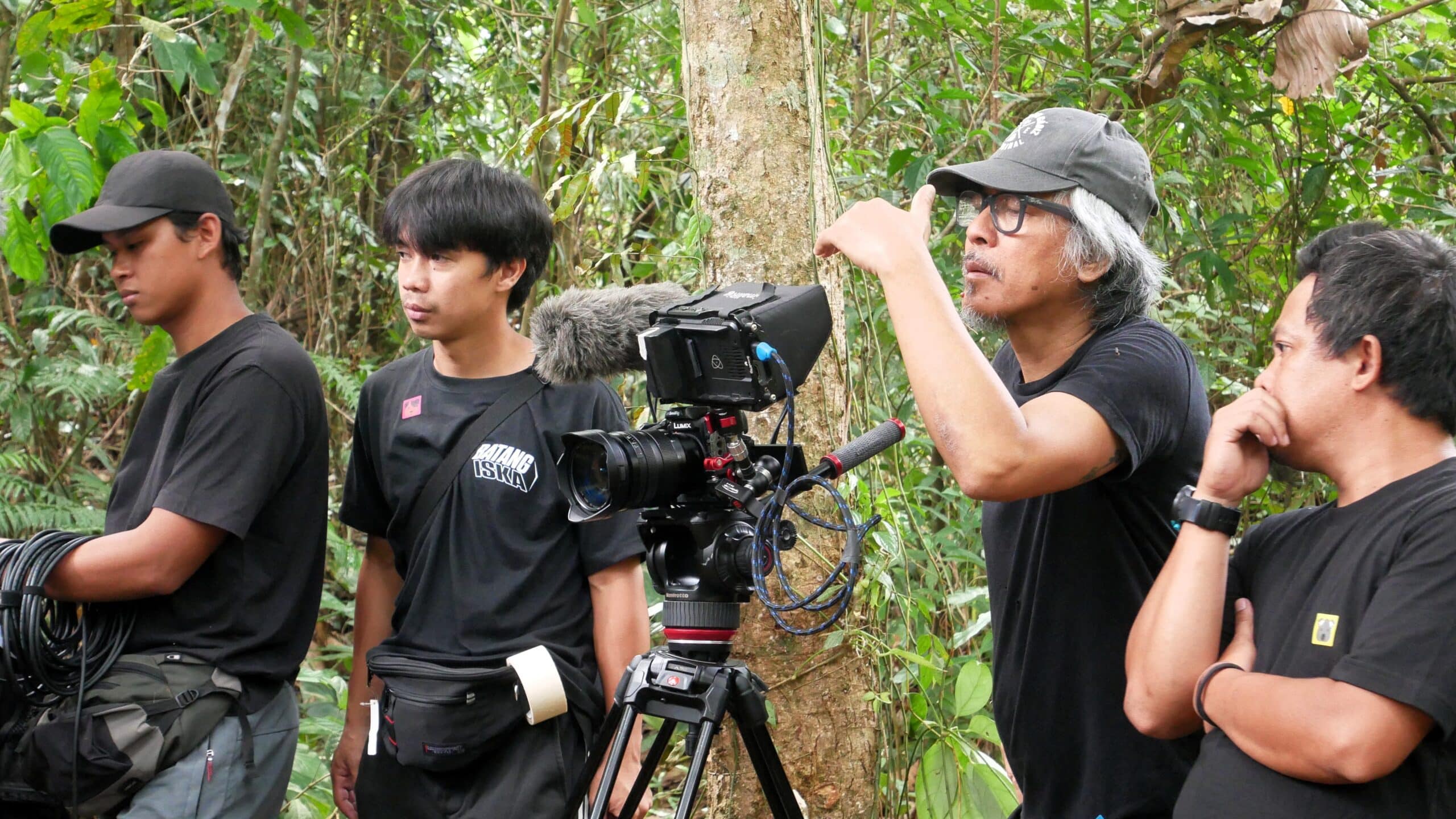
The acclaimed auteur on ‘Let Us Through…’ set in Sampaloc, Quezon where he also lives. | Photo by Hazel Orencio
Synopsis
Diaz shared the following synopsis of his new film: “1617, Las Islas Filipinas. The Spanish friar, Padre Enciso, the encomendero of one of the islands in Las Islas Filipinas, rules with unrelenting toughness and insatiable libido. ‘To tame these savages,’ he proclaims.
“He salves his cruelty effectively by invoking the soul’s emancipation through Jesus’ suffering; and the hospitable and embracing indigenous Malay is doomed.
“After the conversion of the majority of the island’s population to Christianity, the biggest project of Padre Enciso is the ongoing building of the church, more than ten years now in the making, that caused suffering and deaths in its wake.
“He decides to use marble for the construction of the altar, but bringing such precious limestones would be very dangerous. The transportation of the marble poses a major challenge, as it is a prime target for criminals. He assigns his truant and juvenile son, Dungwen, to supervise the task, as he trusts no one.
“Dungwen, along with a select group – porters, militias and mercenaries – shall trek more than fifty kilometers of forest, mud, and a steady threat of attacks and ambush by bandits and thieves, but the one they dread and fear the most is the brutal marauder, Baribari.
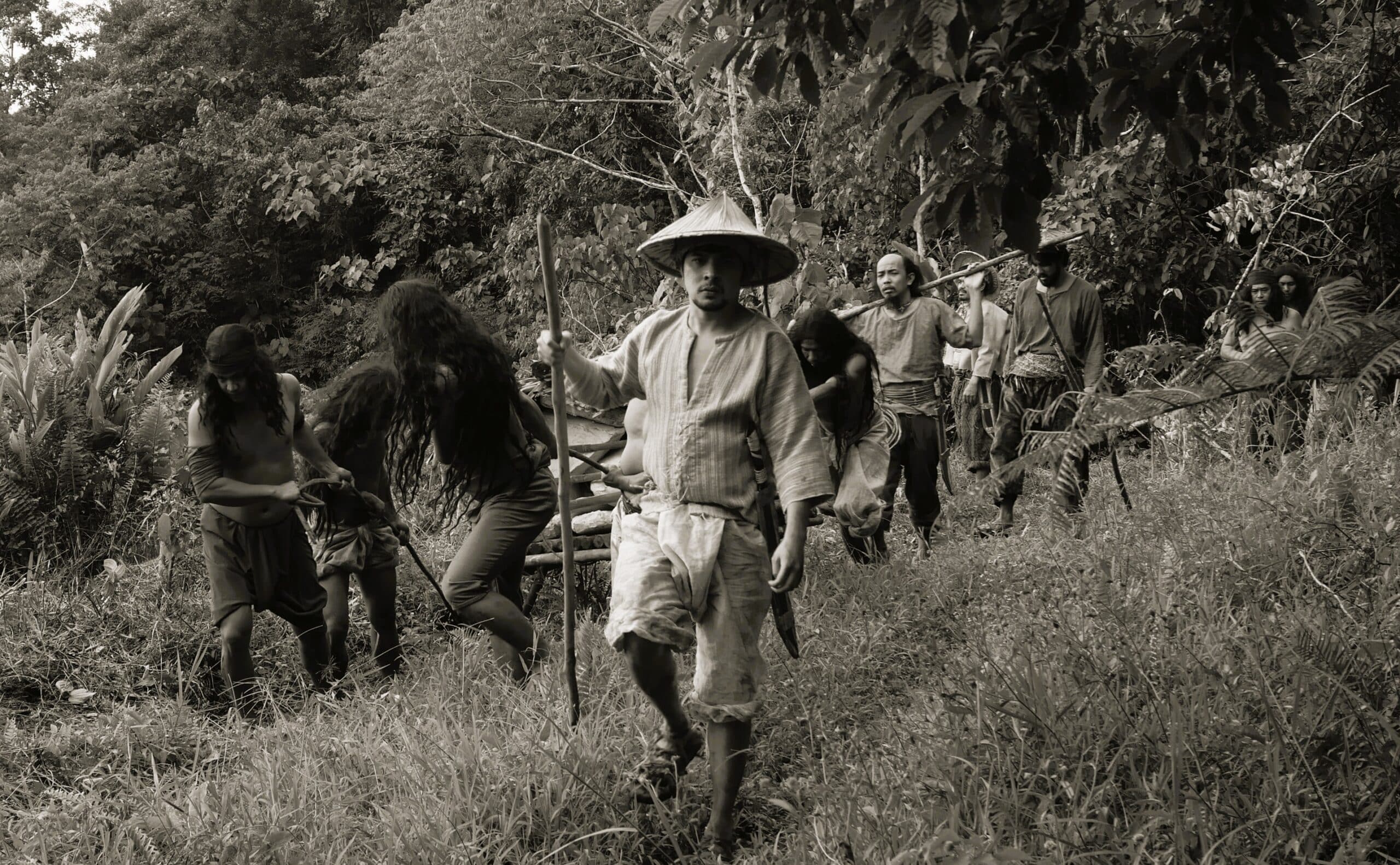
Christian Bables, Amado Arjay Babon and Rafa Siguion-Reyna | Photo by Hazel Orencio
“The popular female healer, Babayeng Indimatandog, continues to propagate the Malay animist traditions, defying Padre Enciso’s theocratic absolutism. He must act decisively to stop her.
“The Philippines was forcefully reconstructed by imperial Spain via copious sex (we now call rape), gluttonous appetite (we now call plunder), and the promise of salvation (we now call cataclysm).”
Colonial structures
Diaz, who recently taught a film master class by the International Filmmaking Academy in Bologna, Italy, also shared his director’s statement:
“In 1565, forty-four years after Ferdinand Magellan reached the island of Cebu, where he conducted the first mass conversion to Christianity in the archipelago now called the Philippines, Miguel Lopez de Legazpi was able to recapture Cebu and declared the area a colony and property of Spain under the Treaty of Tordesillas.
“There were four failed expeditions between Magellan and Legazpi. By 1571, Legazpi implemented the encomienda system and assigned the initial five hundred plus encomenderos in many parts of the archipelago. This was the beginning of the feudal setup in the Philippines that still exists today.
“In the encomienda system, friars, conquistadors, and settlers were assigned and given authority to govern and convert indigenous communities, enforce tributes/taxes, and impose forced/serf labor.
“With this setup in place, the construction of churches, forts, piers, roads, bridges and mansions went full blast, along with the development of plantations, factories and mining sites.
“The encomenderos and their families eventually became part of the principalia, the rich landowners and hacienderos, who owned plantations and big businesses.
“During this period of interminable constructions, thousands upon thousands of natives, especially males, died because of forced labor. The first Catholic church in the Philippines made of stones, the San Agustin Church (in Manila), was built for twenty-one years, from 1586 to 1607.
“Fifteen to twenty years was the average construction period of churches in the late 16th century to the 17th century. Most of the churches then were built with the blood and death of the natives.
“These houses of God, created with deified grandeur, heavy stones, thick walls, and majestic high ceilings, are among the true proofs of the horrors of colonization. This is simply the discourse of the film, ‘Makikiraan Po (Let Us Through, Dear Ancestors).’”
Asked if there is any specific church in the Philippines that motivated him to write about the suffering and deaths behind the construction of these ancient structures in the country, Diaz replied, “There was a time in my life when I experienced intense obsession with old architectural structures, and the colonial architecture was very much a part of it – churches, forts, houses, roads, mansions, bridges – the looks of the epochs, part of my fascination with history.
“And, of course, research will tell you deep contradictions behind aesthetic magnificence, which is oftentimes truly disturbing and dark. In the case of the colonial structures of the Philippines, it was the suffering of our people, i.e., forced labor, serfdom.”
Isabel Sandoval
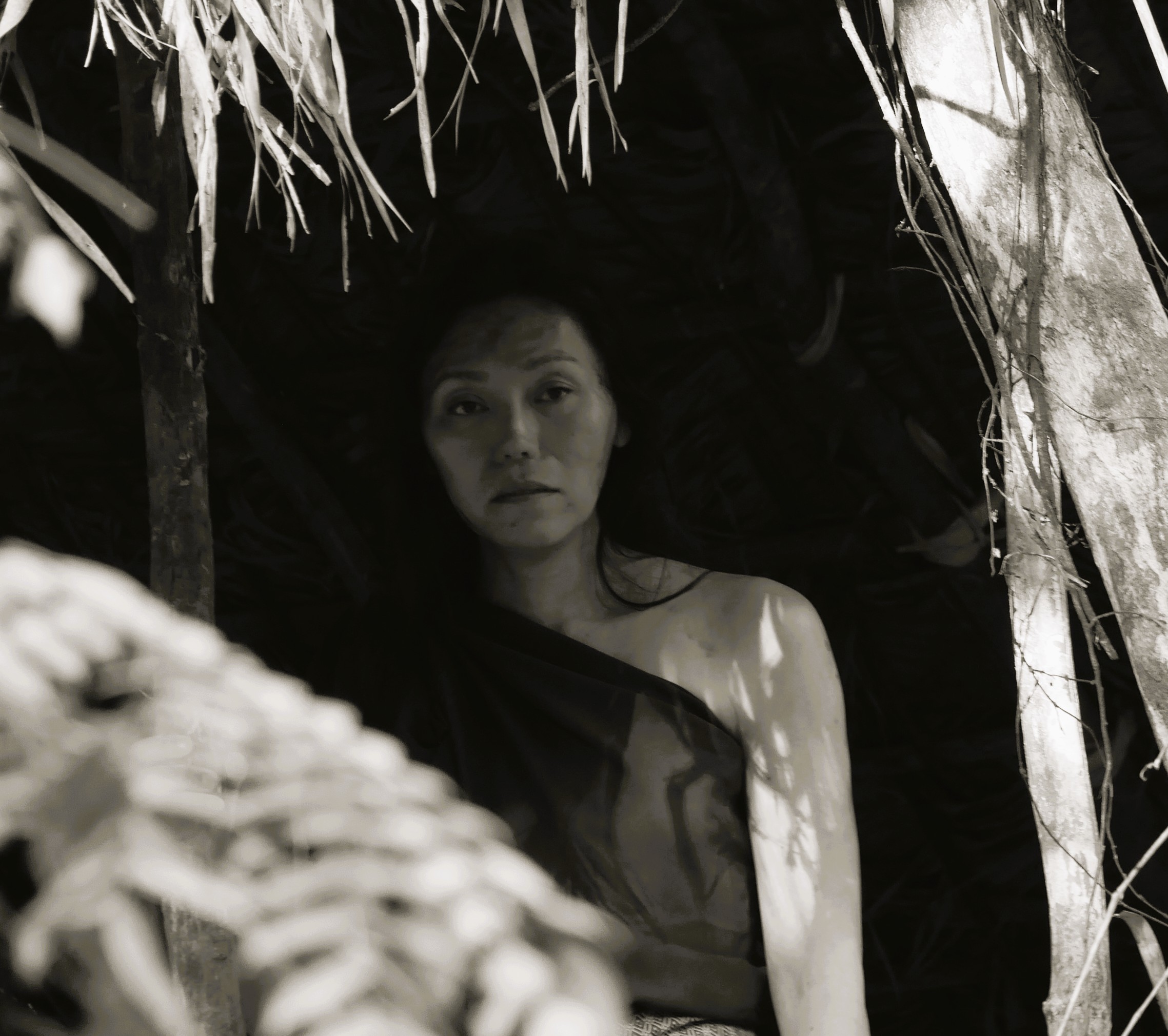
Isabel Sandoval as Babayeng Indimatandog in Lav Diaz’s latest Venice Film Fest entry | Photo by Hazel Orencio
The film’s cast is led by Bart Guingona (Padre Enciso), Ronnie Lazaro (Himamat), and two actors who appear in their first Diaz film, Christian Bables (Dungwen) and Isabel Sandoval (Babayeng Indimatandog).
In a casting coup, Sandoval, herself a celebrated filmmaker whose two films premiered on the Lido, “Lingua Franca” and “Shangri-La,” experienced being directed by Diaz for the first time.

Ronnie Lazaro as Himamat | Photo by Hazel Orencio
Diaz said about tapping Sandoval for the first time in his new film, “It’s the Bisaya connection. We are from the middle and southern part of the country, and that area is Bisayaland. There’s always that deep ancient Malay bond among us when it comes to doing things.
“Right from the very beginning, Isabel was my choice for the role of the Babaylan, the ancient Malay healer. The Philippines still has Babaylans. They represent our last link to our pre-Hispanic and pre-Islamic past, true remnants of our being Malays, our banished practices.
“The epoch of the film was the late 16th and early 17th centuries, the conversion and construction periods of colonial Spain, and it was a transition period. Her name in the film is Babayeng Indimatandog, translated literally and figuratively as The Untouchable Woman, and indeed, the Malay Babaylan remains untouchable until today.”
Sandoval, via email, revealed how she was cast. “I actually joked with Lav about it before it happened,” she recalled. “We were at the reception for ‘Magellan’ at the New York Film Festival. I said, half-seriously, ‘Lav, let me be an extra in your next film.’ He leaned over and said, ‘Actually, how about I give you a real role?’
“He told me to email him, and a little over a month later, I was coordinating with Hazel Orencio and flying to the Philippines to begin shooting the week before Christmas.”
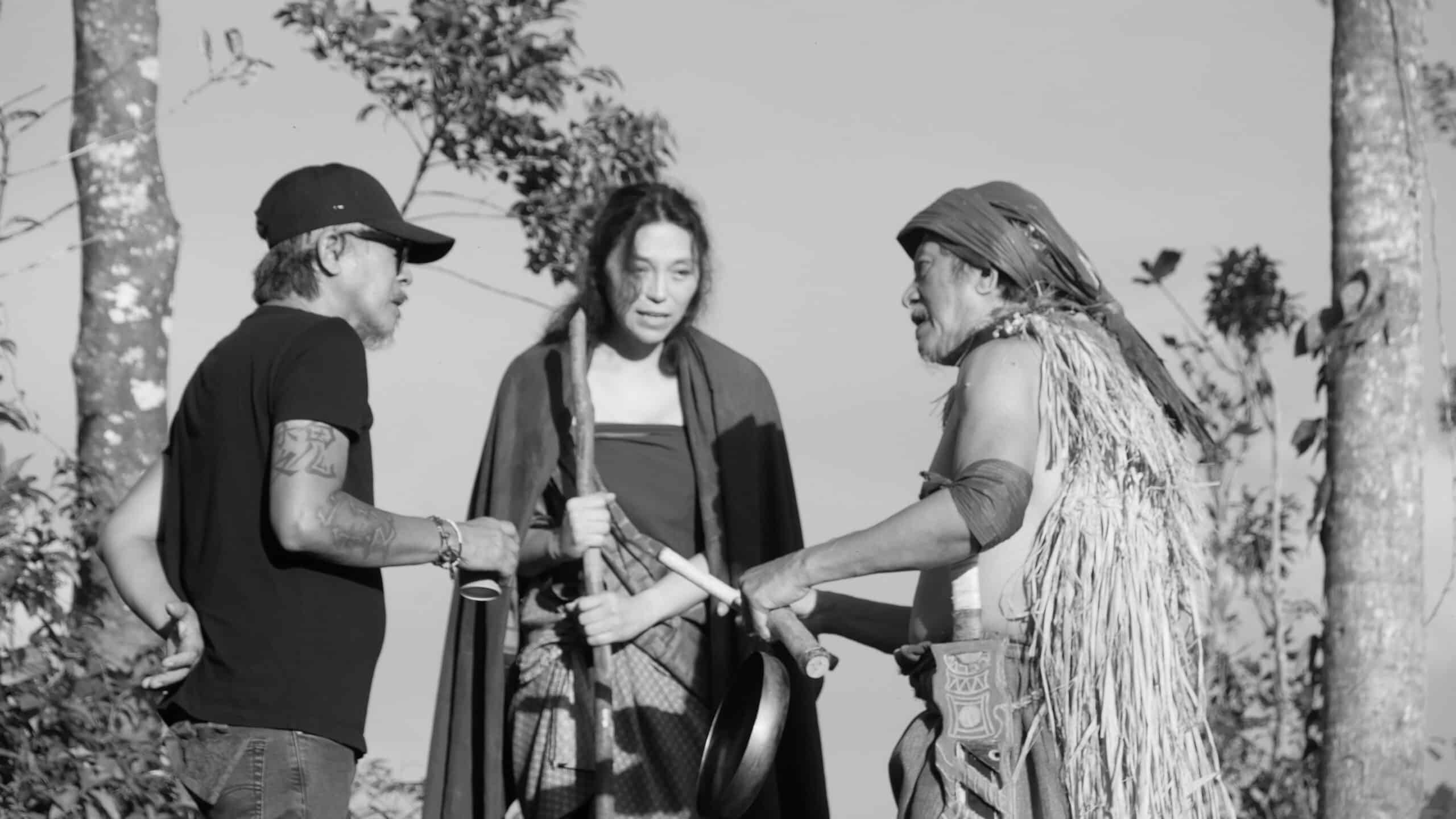
Lav Diaz directs Isabel Sandoval and Ronnie Lazaro | Photo by Hazel Orencio
She continued, “Working with Lav was unlike anything I’d experienced before. His process is completely his own, but what struck me most was how relaxed and unhurried the atmosphere on set was despite the seriousness of the work. There was never any sense of forcing a performance. My job was simply to be fully present in the moment.
“We were shooting in the countryside of Quezon, and the whole experience almost felt like being at an artist residency. We’d spend five or six hours a day making the film, usually wrapping before dark, and I’d have the rest of the day to write, read, or work on my own creative projects. It was an incredibly generous way to make cinema.”
Sandoval relished playing Babayeng Indimatandog, translated literally and figuratively by Diaz as The Untouchable Woman, who “continues to propagate the Malay animist traditions, defying Padre Enciso’s theocratic absolutism.”
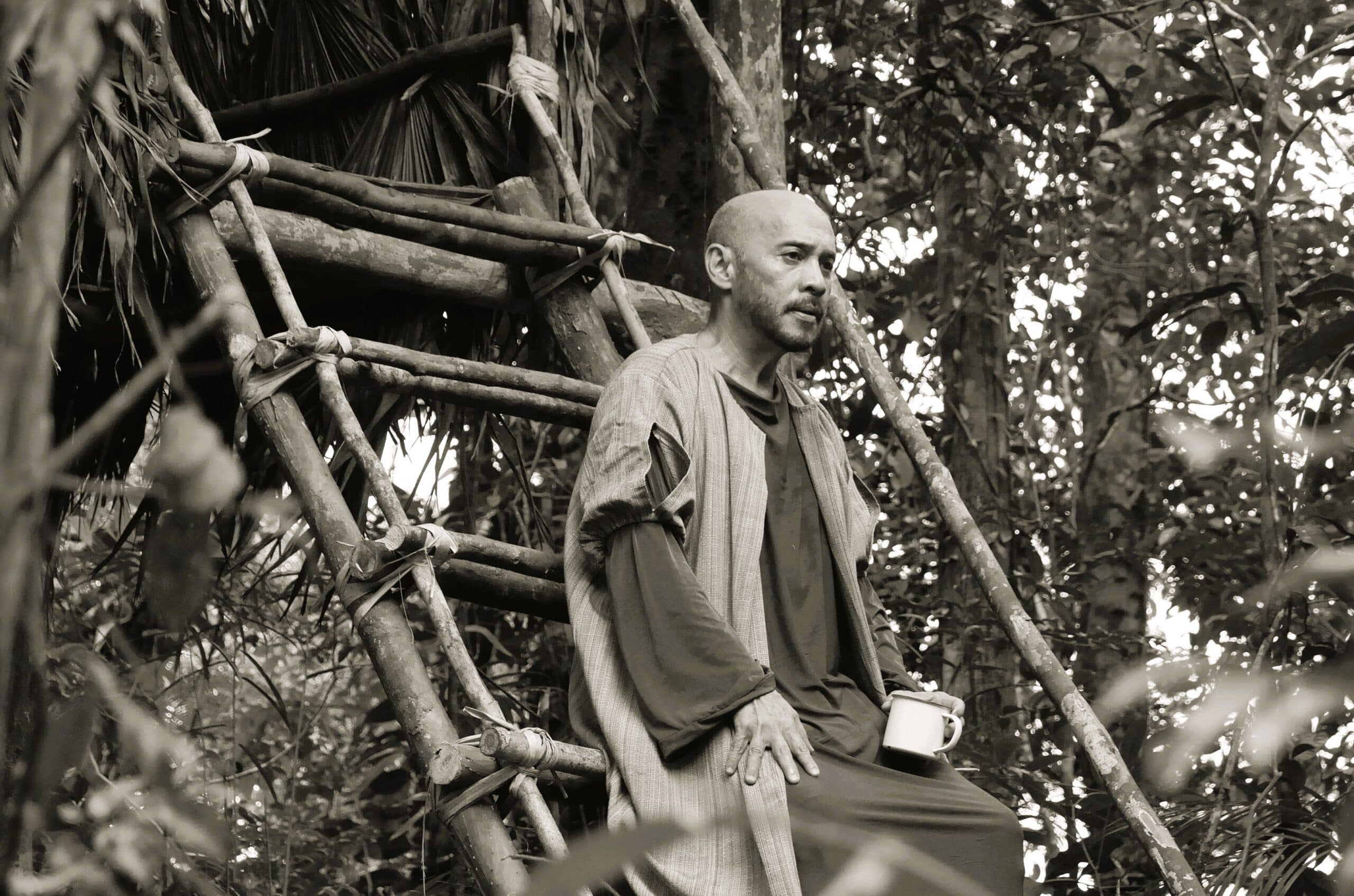
Bart Guingona as Padre Enciso | Photo by Hazel Orencio
The actress-director enthused, “It felt strangely fated because Babayeng Indimatandog is, in many ways, a direct counterpart to the babaylan character I wrote for my own film ‘Tropical Gothic,’ which is currently in casting. It was fascinating to inhabit that world through another filmmaker’s vision, especially someone whose cinema is so distinct from my own.”
She also pointed out her Bisaya kinship with Diaz. “I also loved speaking in Cebuano, my native tongue. I had the chance to speak it in ‘Lingua Franca,’ but its resonance feels even more profound in this film. During the Spanish colonial period, simply speaking a native language becomes an assertion of identity and cultural continuity.
“Most of Babayeng Indimatandog’s invocations and ritual chants were improvised on set with Lav’s guidance, which made the experience feel deeply personal. It gave me the freedom to draw from my own instincts while remaining true to his vision.
What moved me most about Babayeng Indimatandog is that, even when she isn’t on screen, her presence is felt throughout the story.
“She becomes a symbol of spiritual resistance against colonial power, and her influence continues to inspire the community around her. I loved that Lav wasn’t interested in portraying her simply as a healer, but as someone whose very existence becomes an act of defiance.”
Sandoval, whose most recent work is “Moonglow,” where she also acted, added, “As a filmmaker myself, it was also a rare privilege to surrender completely to another director’s vision, especially one I admire as deeply as Lav’s.”
The prospect of returning to the Lido through a Lav Diaz film thrills her. “Venice will always hold a special place in my heart because every time I’ve been there, it’s marked a first in my creative life,” she said.
“‘Lingua Franca’ was my first feature to premiere there as Isabel. ‘Shangri-La’ was my first short film and my contribution to Miu Miu’s wonderful Women’s Tales series, alongside filmmakers I’ve admired for years like Agnès Varda, Lucrecia Martel and Lynne Ramsay.
“Now, I’ll be returning with my first feature as an actor, directed by Lav Diaz. It’s a completely different experience, but it feels like another meaningful milestone in the same journey. And beyond all of that, I’m simply excited to be back in Venice.
“Some of my happiest festival memories are the simplest ones: waking up before sunrise, taking the vaporetto from Dorsoduro to the Lido, and spending the day watching films. I’m already counting the days until I get to do that again.”
On his other actors, Diaz said, “Hazel Orencio is the casting director. Ronnie and Bart are now essential beings in our production – they’re family, they’re the alcohol laden part of the family. Hazel and Christian knew each other. They worked together in a television series. Bianca, one of our producers, asked Christian to work with us.”
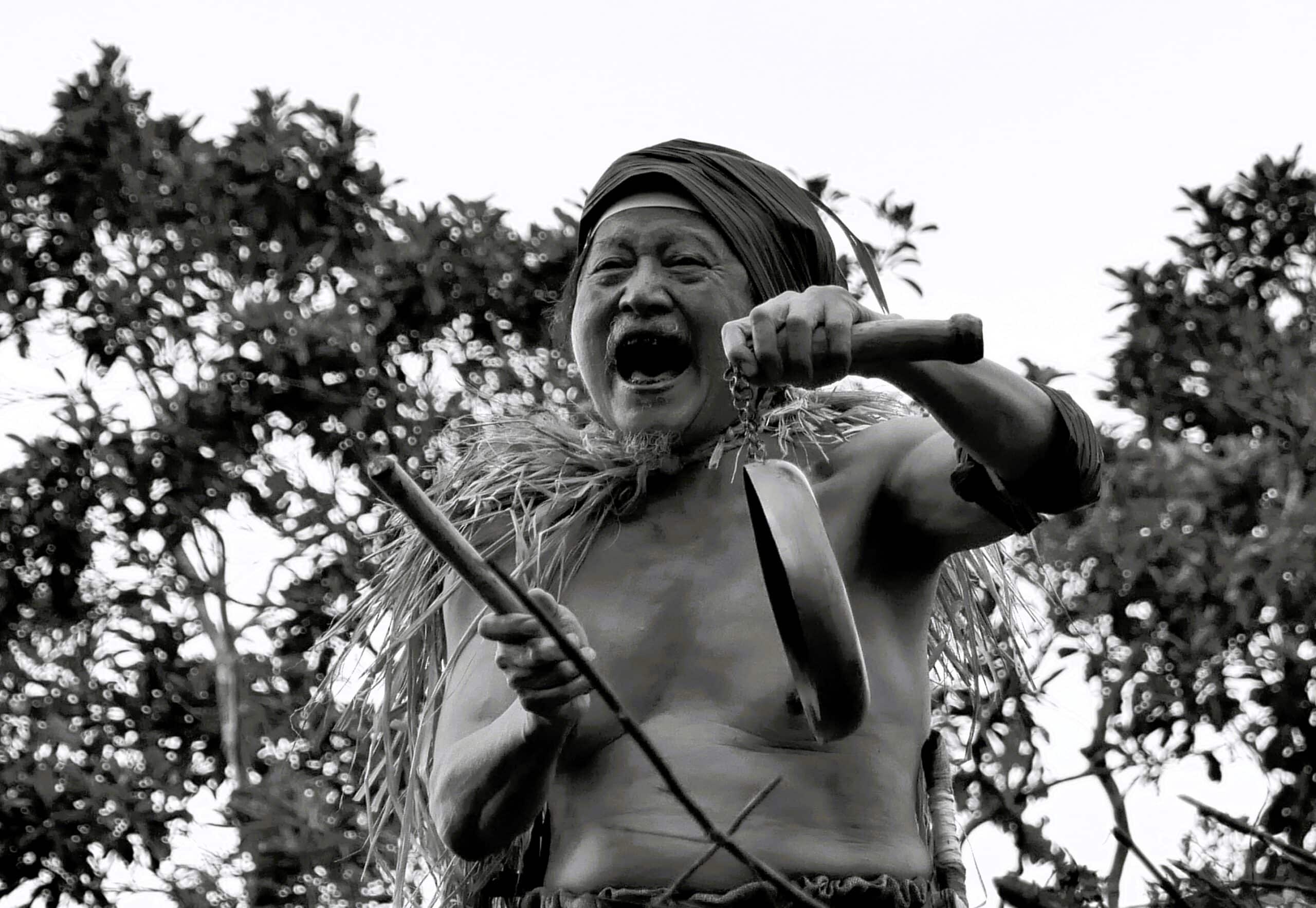
Ronnie Lazaro as Himamat | Photo by Hazel Orencio
“Let Us Through…” also marks another casting milestone. “This is Yul Servo’s comeback film, so to speak, after his long political foray,” Diaz said of the actor who plays a character named Baribari, and whose first film was the director’s “Batang West Side,” shot in New York and Jersey City.
“Yul plays two characters in the original material that we started shooting,” Diaz added. “One was the Baribari of the supposed flashback. Baribari is a bandit.”
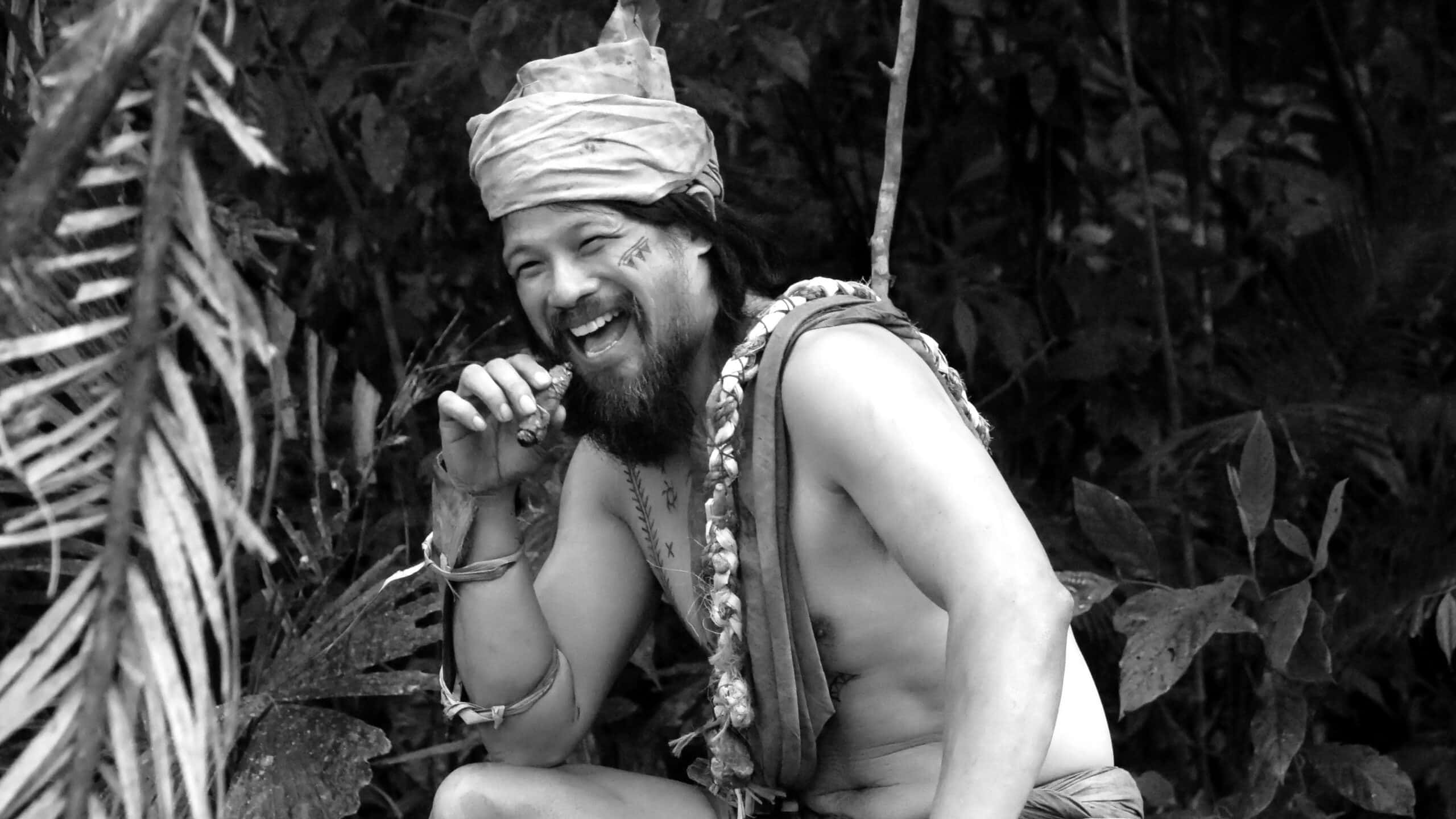
Yul Servo as Baribari | Photo by Hazel Orencio
Two-parter
The filmmaker, revered for what is now coined as slow cinema, clarified that the original concept for his new project was a two-parter, one about the present and the other about the past.
He explained, “In fact, ‘Makikiraan Po’ was initially just a small part of ‘Dungwen,’ a mere flashback. But during the shoot, the thread, the story of the flashback, started to open up as a potential autonomous narrative.
“It’s been my principle in my creative process that if a door is opening up, I follow it – there is something there, a zone, ambiguous, and uncertain, but I knew that a fertile realm lies there.
“So I have to go and discover it. It’s a very organic process; this is akin to ‘Ebolusyon ng Isang Pamilyang Pilipino,’ which was also just a flashback, and I kept following and following the lead, and it became the eleventh hour film.”
Orencio talked about the other actors in the film and their roles. She said, “Bong Cabrera is Mang Tugis, the strong head of the touring group which consists of Dungwen (Christian Bables), Higante (Rafa Siguion-Reyna), and Diego (Amado Arjay Babon).
“Dungwen is the son of Padre Enciso, who is in charge of the construction of the church. Higante is the scheming one in the group. Diego is Dungwen’s best friend and is also the softest.”
Like several master filmmakers, Diaz likes to work regularly with a set of actors. He cited the reason. “The connection, the relationship, the trust – there is so much love and commitment to what we’re doing. There’s not much talk when I’m collaborating with them. We just look at each other and off we go.”
But this time, Orencio is not in the cast. She clarified, “I will be acting in the part two.” She dropped another surprise: “It’s almost done filming.” “Let Us Through…” has yet to premiere in one of Lido’s cinemas, and yet the truly prolific Diaz is already wrapping up filming the sequel.
Orencio has lost count of how many films she has line-produced for Philippine cinema’s most lionized filmmaker in the international film community. “But I think it’s the sixth or seventh film. For me kasi, title lang naman siya, but it’s pretty much the same job as production management, which I’ve been doing for Lav’s films since 2014.”
Sampaloc and Venice
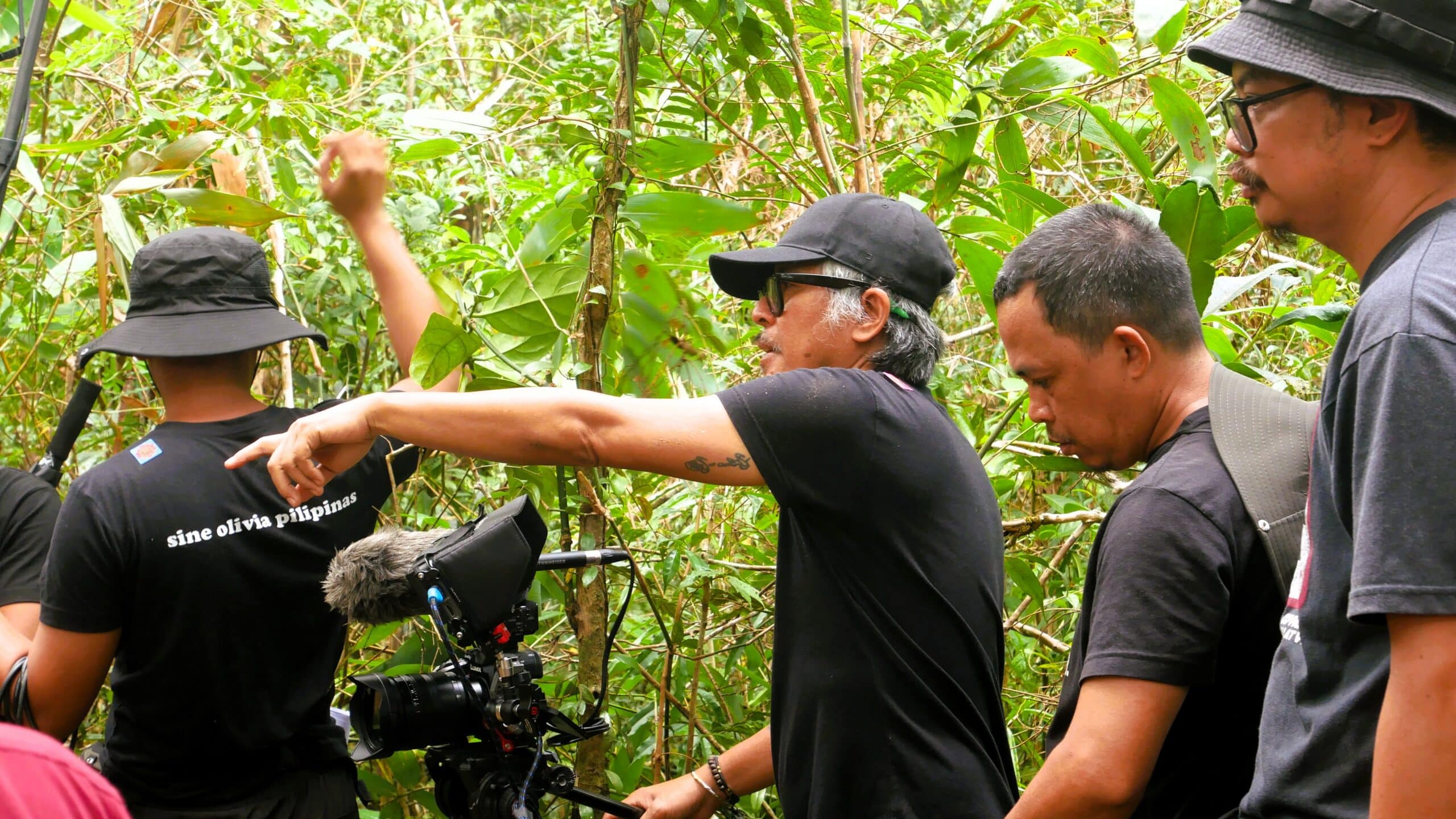
The acclaimed auteur on ‘Let Us Through…’ set in Sampaloc, Quezon where he also lives. Photo by Hazel Orencio
Sampaloc, Quezon, whose rustic beauty is memorably lensed in “Magellan,” again figures in “Let Us Through…” “Yes, the film was shot entirely in Sampaloc, Quezon,” Diaz confirmed about the town, located southeast of Manila, and nestled in the Sierra Madre Mountains. It’s now home to the long-haired filmmaker.
“I was homeless for so, so long, that after the displacement of being away from my childhood milieu in Maguindanao, I was living in an abyss of melancholia,” he admitted.
“I realized that I’ve been making cinema and poetry because of my endless journey back to where I come from. Sampaloc gives me that sense of home, a sphere that is so tactile, mysterious and even unattainable – the rainforest, river, lakes, rice fields, rough roads, birds, clouds, the old woman walking alone in a deserted street, the little puppies waiting for their mother.”
Diaz also exalted Venice, where the film community always welcomes him and his work. “Venice is like Maguindanao and Sampaloc – it’s home, a place so familiar, even the smell of the murky waters. I can almost see Marco Polo’s arrival after long, long years of travel. The Lido is a portal and a repository of memory. It is the island of cinema.”
He also looks forward to picking berries again in his favorite secret patch on the Lido. “Oo naman, my beloved berries down the secret shores of the Lido,” Diaz said to USNewsRank and Canada. “Seeing them again shall be a pilgrimage.”
 Ruben V. Nepales is an LA-based journalist whose honors include nine first prizes from the National Arts & Entertainment Journalism Awards and the Los Angeles Press Club’s Southern California Journalism Awards. He authored “Through a Writer’s Lens,” which won first prize in nonfiction at the 2020-2021 National Arts & Entertainment Journalism Awards. In 2004, he became the first Filipino voter of the Golden Globe Awards, He is a member of the Golden Globe Foundation, one of Hollywood’s biggest philanthropic organizations.
The post Lav Diaz’s surprise new film makes it to 83rd Venice Film Festival appeared first on USNewsRank.