

Nurse the Dead cast-and creatives. Photo from Sthanlee B. Mirador
LOS ANGELES – “Nurse the Dead,” the trailblazing bilingual streaming series shot in the United States, will have five seasons. Mark Labella, the showrunner, creator, writer and director of the history-making English and Tagalog show filmed in America, revealed this in my recent video interview with him and the show’s two stars, Jelynn Malone and Gigette Reyes.
Mark disclosed his plans for the contemporary dramedy series, which successfully debuted at number 7 on iWant, moved up to number 6 as I write this, and portrays a group of nurses in a Los Angeles hospital as they cope with life, death and everything in between.
Mark, who was a frontline health care worker during the pandemic, divulged, “We have an 87-page bible that explores the five stages of grief – denial, anger, bargaining, depression and acceptance. So the first season is denial. That’s why we have ‘The Denial Song’ by the incredible Jade Riccio. And then we have anger as the next stage. And so you’ll see it transition and grow in the second season.”
Nurse with a third eye
Jelynn stars as Noa Reyes, a nurse supervisor gifted with a third eye who seems accustomed to seeing and dealing with ghosts haunting her hospital, as well as the staff and patients.
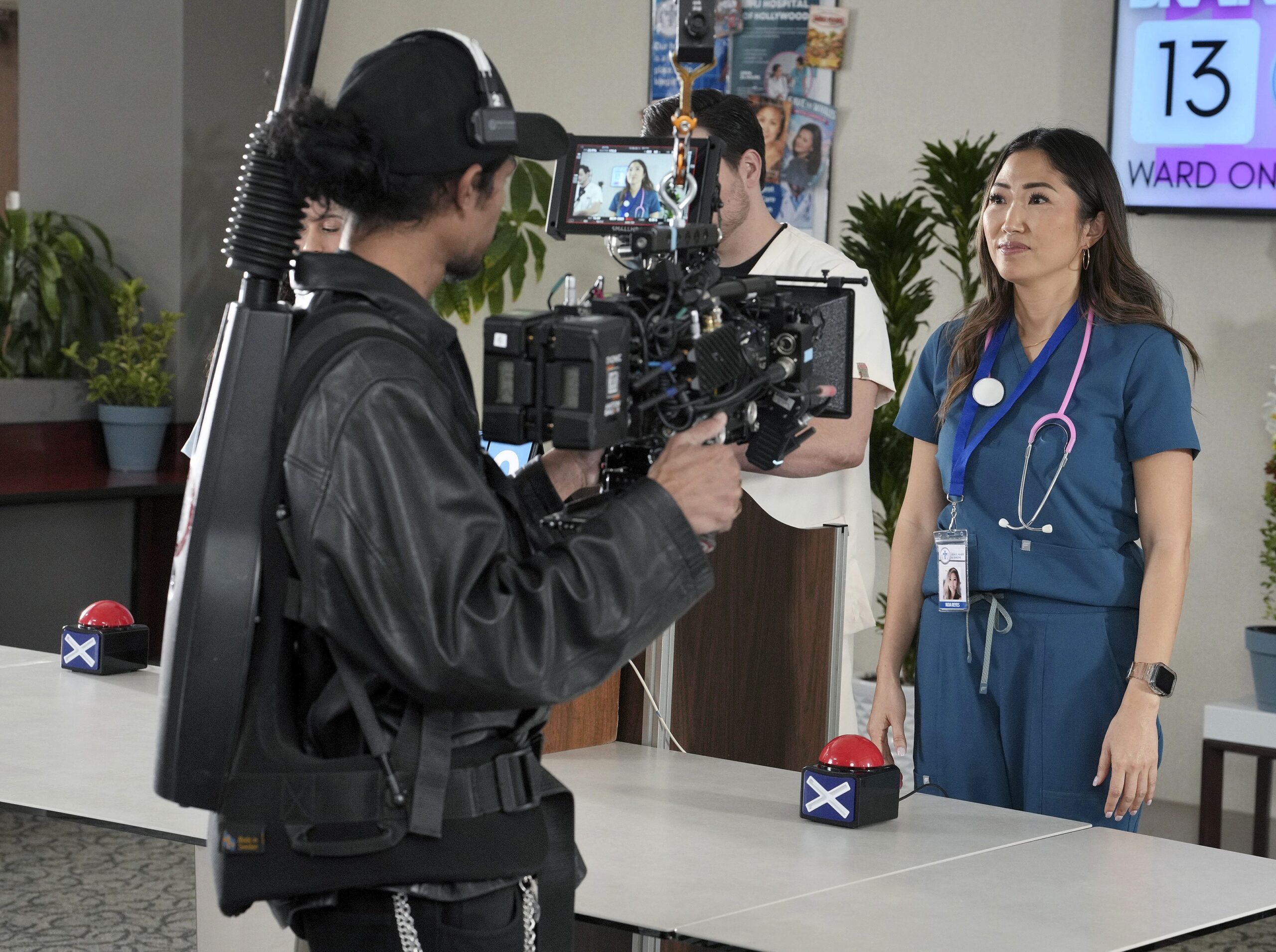
Jelynn Malone as Noa Reyes | Photo by Sthanlee B. Mirador
Drea Castro and Wesley Villarica also directed episodes of the groundbreaking series, which costars Gigette Reyes (“Freakier Friday”) as “Mami” Tess Reyes, Johari Johnson, Princess Punzalan, Ruby Rodriguez, Pablo Azar and Tootsie Guevara. Mark, Wesley and Marvin Aritrangco produce the groundbreaking series.
First Filipino studio series shot in Hollywood
Mark, a hospital corpsman in the U.S. Navy for almost five years, explained how he conceived the idea of “Nurse the Dead,” hailed as the first Filipino studio series shot in Hollywood. The Fil-Am, who was a pre-med student at the George Washington University and also attended Cebu Doctors’ University, said:
“I have been trying to write a Filipino nursing show for years. You could see a PSA that I wrote called ‘Tita’s Anatomy.’ I actually wrote this series around when my Papa Dodong passed away, and we always kept FaceTiming with my family. Papa Dodong was my godfather and my mom’s brother. He raised me.
“We’re all nurses in my family. It’s not my story. It’s my family’s story too, because I just had access to it. I was on the front lines with our beloved nurses. But we just kept talking about grief and caretaking. It was just so interesting how we all medically dealt with our grief.”

Photo from iwantofficial/Instagram
‘I saw people die’
When I asked Mark later via email to elaborate on the grief that sparked “Nurse the Dead,” he wrote the following moving words:
“‘Nurse the Dead’ came from a lot of different sources of grief that collided at the same time in my life. I was a frontline healthcare worker during the pandemic. Long before I ever sat down to write the show, I was carrying experiences I didn’t fully understand.
“I saw people die. I saw bodies fighting desperately for breath, their accessory muscles contracting so hard that their necks and chests seemed to strain with every inhale. I can still picture it. Even now, years later, my body reacts when those memories surface.
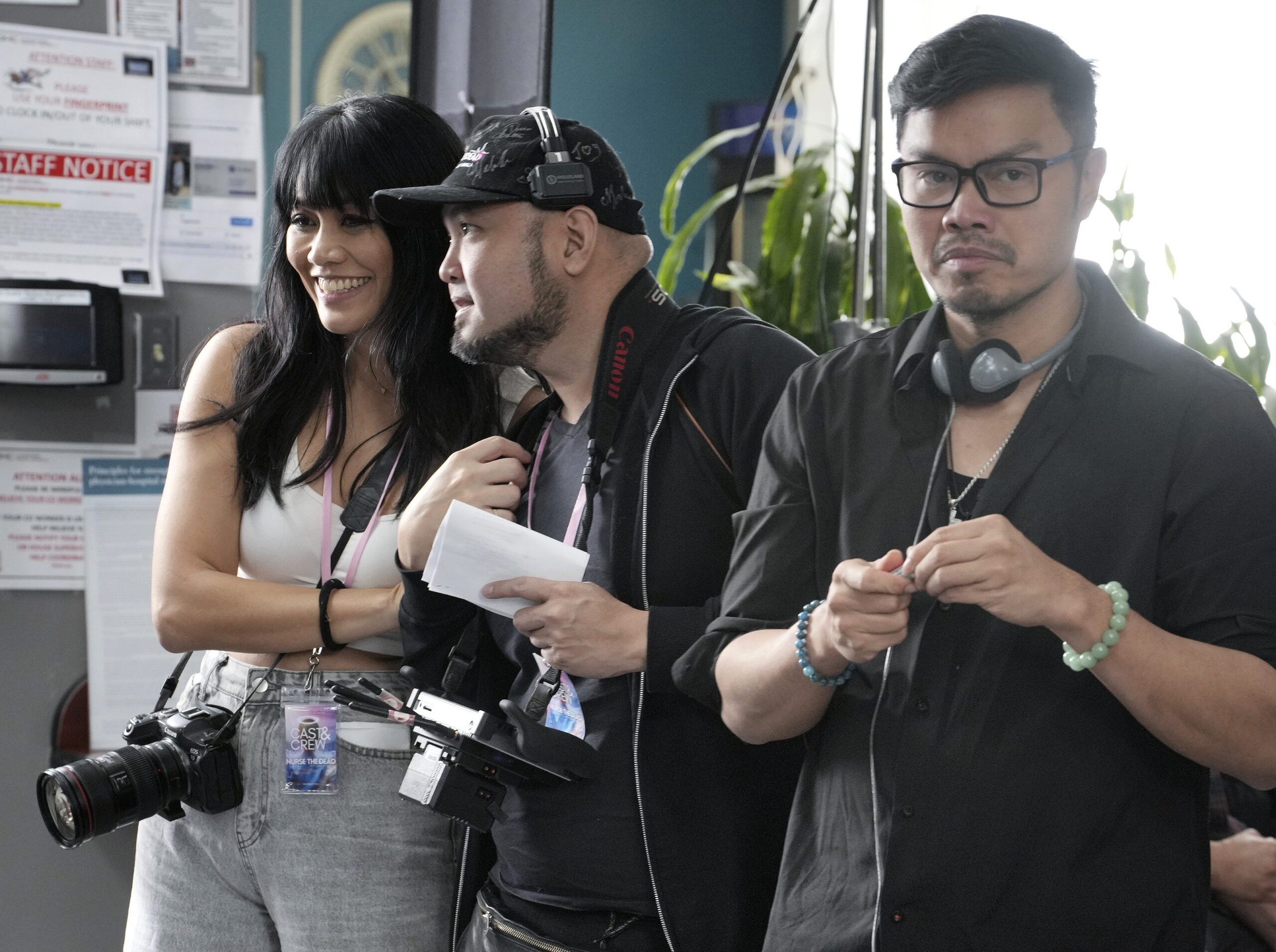
Mark Labella (right) and his co-directors Drea Castro and Wesley Villarica | Photo by Sthanlee B. Mirador
“Some healthcare professionals develop a shield. They have to. They learn how to compartmentalize so they can walk into the next room and care for the next patient. I never fully developed that shield. I carried everything home with me.
“I couldn’t stop thinking about the people we couldn’t save. I couldn’t stop thinking about the fear in their eyes. I couldn’t stop thinking about the healthcare workers who showed up every day despite knowing the risks. I lost friends and colleagues who died trying to save their own lives.
“At the time, I thought I was handling it. I kept working. I kept moving. I told myself I was fine because that’s what we do. We push through. We survive that way. We take care of the next person.
Grief and trauma
“But looking back, I was carrying grief and trauma that I hadn’t processed. The memories replayed constantly. The faces. The losses. The feeling that no matter how hard we worked, there were still people we couldn’t save.
“Then my Papa Dodong was diagnosed with cancer during the pandemic. We watched his condition progressively worsen. I watched my family, many of whom are all medical professionals (mostly RNs) themselves, navigate the impossible task of caring for someone they loved while knowing they were losing him.
“There is a particular kind of heartbreak that comes from being medically knowledgeable enough to understand what is happening while desperately wishing you were wrong. When he died, it felt like something inside me sparked to finally write this story.
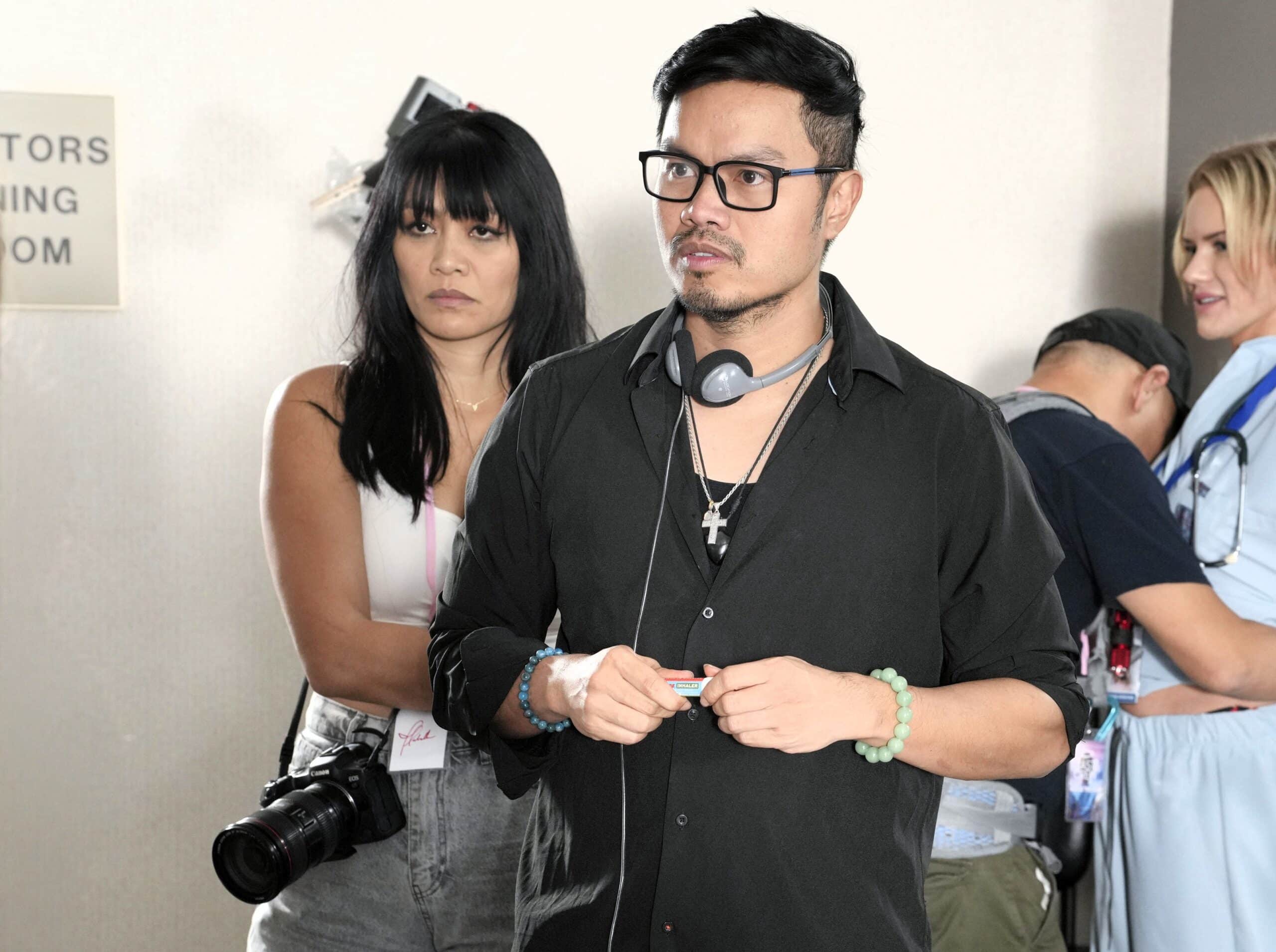
Co-directors Drea Castro and Mark Labella | Photo by Sthanlee B. Mirador
‘Nurse Unseen’
“By that time, I had already watched filmmaker Michele Josue’s documentary ‘Nurse Unseen.’ As a Filipino healthcare worker and the son of a nurse of 46 years, it hit me in a way I wasn’t expecting. It forced me to confront things I had been avoiding about sacrifice, identity, grief, and the often invisible burden nurses carry while caring for everyone else.
“I was already beginning treatment for PTSD and cognitive behavioral therapy. For the first time, I started understanding how all of these experiences were connected. The pandemic. The deaths. The guilt. The fear. My Papa Dodong. The constant worry about my community. The feeling of responsibility. They weren’t separate events. They had become one story living inside me.
Comedy about grief
“And that realization became ‘Nurse the Dead.’ What emerged from that process wasn’t a tragedy. It wasn’t a medical drama. It was a comedy about grief. Because grief is strange. Sometimes it’s heartbreaking. Sometimes it’s absurd. Sometimes it’s beautiful. Sometimes it’s ridiculous. Sometimes you laugh because crying would destroy you.
“That’s why Noa sees ghosts. The ghosts are funny, chaotic, annoying, heartfelt, and occasionally profound. The ghosts, the work, the people – are the things around us that help us to stop that grief.
“But underneath the comedy is something deeply personal. The ghosts represent the things we carry with us. The people we miss. The conversations we never got to finish. The love that remains after someone is gone. The grief that refuses to disappear simply because we want it to.
Love letter to nurses
“Papa Dodong’s death was the emotional catalyst. But ‘Nurse the Dead’ was also inspired by the losses of the pandemic, by the healthcare workers who gave everything, by the colleagues and friends we lost, by my family’s journey through grief, and by my own healing process in therapy. You’ll see pieces of all of those experiences throughout the series, through the episodes.
“I think back to the anger I felt when I finally came home after three days at the facility. Marvin had prepared this beautiful feast for our small COVID bubble, something full of love, something meant to bring comfort. But I couldn’t receive it that way. Instead of gratitude, I felt rage.
“Looking back, I understand it now. That wasn’t me being ungrateful. That was grief. That was anger looking for somewhere to land. That was the part of me that had spent days surrounded by death, coming home and not knowing how to step back into life.
“Ultimately, ‘Nurse the Dead’ is a love letter to nurses. It’s a tribute to the people who spend their lives caring for others, often at tremendous personal cost. It’s a recognition of the sacrifices healthcare workers made during one of the most difficult periods in modern history. And it’s a reminder that even the people doing the healing sometimes need healing themselves.
Hopeful, healing, human and alive
“For me, writing ‘Nurse the Dead’ became an act of survival. It was my way of taking grief that felt impossible to carry and transforming it into something hopeful, healing, human and alive.”
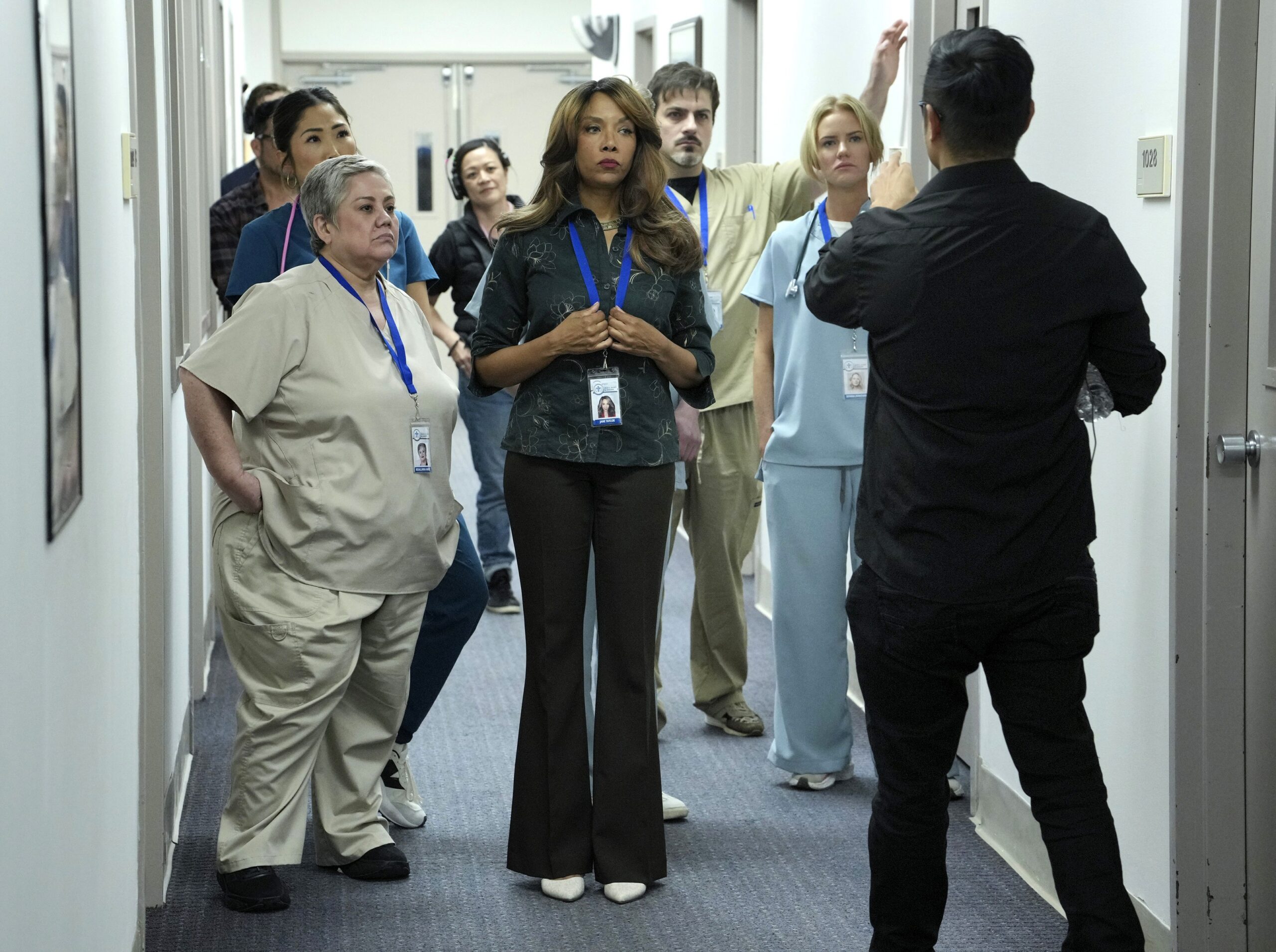
Ruby Rodriguez (left), Johari Johnson and the cast being directed by Mark Labella. Photo by Sthanlee B. Mirador
For many years, I lamented the absence of Filipino characters in American hospital or medical shows. These series did not depict the reality that Filipino medical or health professionals are a big presence in hospitals, clinics, and healthcare facilities in the U.S. But newer shows like “The Pitt” and “St. Denis Medical” finally addressed the glaring omission.
Now, “Nurse the Dead” is more than making up for the many years that American medical shows ignored the big presence of Filipinos in health care in the U.S. iWant, ABS-CBN’s streaming platform, which was relaunched last year, premiered the eight-episode series to coincide with the Philippine Independence Day commemoration last June 12.
Jelynn said, “It was something that I’ve been hoping, wishing, and waiting for a long time. It is an honor to be a part of this show at this time in 2026 with all the energy around ‘The Pitt.’ It’s very telling to see how the Filipino community has rallied around ‘The Pitt,’ especially as of late, just feeling connected to seeing people that look like them on camera has been really powerful.
“So I feel like God gave Mark this vision to do this at this time so that we could tell the story right now, while it’s at the forefront of everybody’s minds and really be able to make an impact. I could not be more honored to be playing a Filipino nurse on this show. I’ve been waiting for so long to have a role to represent Filipinos.
“When I auditioned for things, hoping and wishing something would come up for me, I honestly never thought about a nurse being the role that would do that for me. When Mark brought the script to me, it was like a light bulb moment. Like, oh my gosh, yes, I should have been playing a nurse this whole time to represent such a vast group of people. And obviously, for me personally, I’m able to honor my own family of nurses as well.”
Representation
Gigette agreed. “It’s high time that we have representation, especially in the medical field, because that’s the reality. It doesn’t match what’s being shown on TV. And when I saw ‘The Pitt’ and ‘St. Denis Medical,’ it really thrilled me to see Filipino nurses and other healthcare workers represented.
“With us, though, Filipinos are the leads. So that’s the difference. And speaking in Tagalog and doing a series on a Hollywood set, with pages of dialogue in Tagalog, not just one line, not the token word here and there.
“I thought at first, oh, how is this going to work? But after a while, I felt the significance of it, the impact in my heart. I just felt so honored to do it. And it made me feel really proud. I do feel honored and grateful that I get to do this.
“Representation is important. It’s also just to put the stories out there. The stories that we put out in ‘Nurse the Dead’ are about universal love, friendship, and grief. It’s everything. And also, there’s the comedy, which is an intelligent kind of comedy. So I think this is really good for everyone, not just Filipinos.”
Jelynn admitted, “Mark and I had a personal vendetta, like a little fight that I had with ‘Grey’s Anatomy’. I have like a personal thing with them, and that’s all in my head. But we even make fun of ‘Grey’s Anatomy’ a little bit in this show in the opening because it was so crazy to me how you could have a hospital in the middle of Seattle and not have a single Filipino regular nurse.
“I didn’t understand that. So those things, we approach it from a comedic side because comedy comes from pain, but we really wanted to create a show that you could see the heart of the Filipino, not just side characters, but leads that really talked about Filipino families and Filipino friendships that bloomed in this entire show.”
Mark shared, “And you’ll see every character grow. And it’s not just for Filipinos. You see Latinos, you also see other races. But the heart of the show is Gigette and Jelynn, who they get to play and who they are as human beings in this entire series.”
Jelynn and Gigette
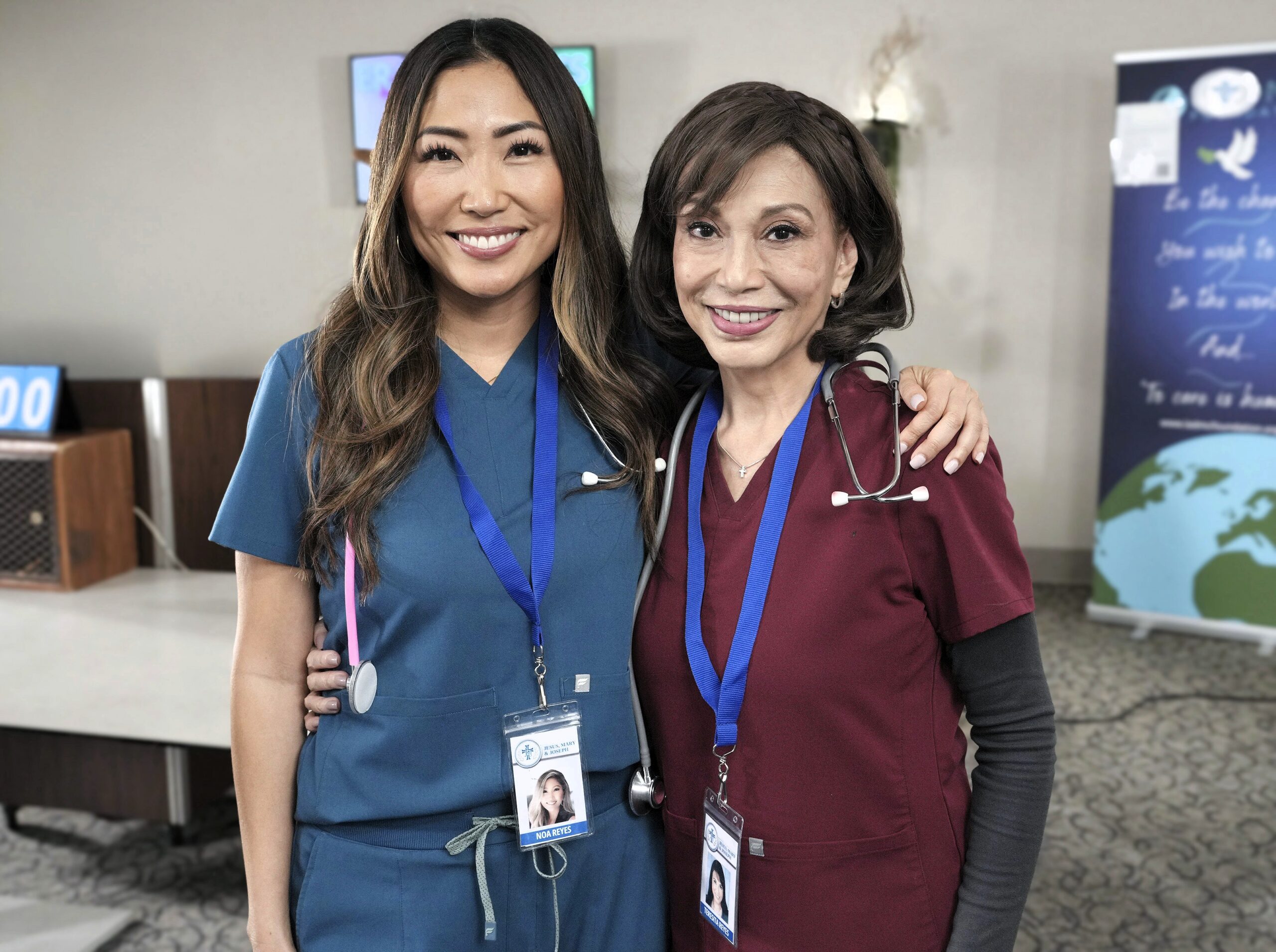
Jelynn Malone and Gigette Reyes | Photo by Sthanlee B. Mirador
Despite the supernatural apparitions in the wards – even in the parking lot – Jelynn and the cast keep their performances grounded.
Jelynn, who is also a TV show host and the co-founder of a coffee brand, credited “a real soul connection” with Gigette. “She and I were invited to do the table read, where Mark had to present ‘Nurse the Dead’ to the community the very first time. We had just met for seconds before we had to start reading the script. We went into it, and our souls found each other. We brought Noa and ‘Mami Tess’ to life in real time.
“It was like the spiritual and emotional connection that Gigette and I just had in the moments that carried us through scene after scene. I believe that’s why the performances were grounded. And I could feel Mark’s story, his heart, and his love around every scenario that we were in, whether it was a funny one or a crazy one.”
For her part, Gigette, whose other credits include TV and theater performances in the U.S. and Manila, shared, “Our connection was instantaneous. It was really odd because I almost didn’t get to do this, but I was called in to do a table read. I thought it was just a table read. I always like to encourage writers. Just a regular table read. When I got there, there were like 60, 70 people. And there was a whole spread. It was an event.
“I’m like, what? Am I going to do a cold read in front of these people? I did, and basically that was my first round of auditions. But we did it, and the audience responded so well. They laughed, they cried. And at the end of the very last scene, Jelynn and I were holding hands and crying. That’s how connected we were already. We just met, like, maybe 40 minutes prior.
“And from that point on…Sorry, I’m going to get emotional (she paused and got misty-eyed). She’s really special to me. She’s like my very own daughter, and she always takes care of me on set and everything. She said that she doesn’t speak Tagalog. And that was a little bit of a challenge, but we just worked through it. We told her what I was saying.
“And even though normally you would want a reaction for every line, acting is reacting. But with Jelynn, she’s so intuitive and sensitive that she gets it. She gets what I’m saying, and she gives me back what I need. I thought it would be a bigger challenge, her not knowing Tagalog, actually, but it turned out it wasn’t that big a deal.
“We had to do an extra step, granted. But it was really workable, and I think I could do anything with Jelynn and Mark.”
Ghost stories
In yet one more instance of life imitating art, unoccupied areas in the hospital in Historic Filipinotown, where the series was filmed, are reportedly haunted in real life. These were the wards used during the pandemic.
“Where do I begin?” Jelynn asked aloud when I inquired about these rumored apparitions. “We would hear children in the halls, and we weren’t allowed to have anyone under 18 come in. My Lola came to set, and she was like, where are those kids? Because she thought there were patients down the hall somewhere. My Lola can’t even hear very well anymore. And she could hear it because it was so prominent.
“So many people heard children laughing in the halls. We would have flickering lights. The call buttons above multiple hospital rooms would go off right in front of wherever we were filming. If we were filming in that particular room, the call button would be going off. You have to physically press the call button for it to go off. And there’s nobody in there.
“A lot of the time, we had things that would fall off the walls, like in the hospital room where we filmed a lot of scenes together. Our production crew would securely put everything up. We would be ready to call action, and then the lights and props would be falling off.
Jelynn continued, “And then we had an EMF tracker, and we were going around the hospital to figure out where all the energy was coming from or where all the spirits were. Most of the activity was happening in our dressing rooms.
“But we didn’t feel like it was anything negative. It felt like they were just wanting to show their presence, and they wanted us to know that they were there. Mark did such a great job incorporating our own personal loved ones into the story. There was an ofrenda episode, and we actually had an ofrenda with photos of all of our loved ones who have passed.
“The hospital staff who works there told us. People have quit because of the activity that has happened in that hospital.”
Mark clarified, “The entire hospital is not haunted. Just the parts that we happen to be shooting at are haunted.”
Support from the Filipino community
On why it was important to tap Filipino figures to do cameo roles in the series – for one, I make my series acting debut in episode two on ‘Nurse the Dead’ – Mark stressed, “Our story is based on things that have happened to us as Filipinos, even though everything is told in a funny way. We even had the story that harkens back to real stories about people who got taken advantage of.

Inquirer’s Ruben Nepales, who makes his series acting debut in ‘Nurse the Dead,’ with star Jelynn Malone, Rowena Treitler and Janet Nepales. CONTRIBUTED
“But you also want to put out the parts of the Filipino community that have really worked hard to help others – SIPA, PWC (Pilipino Workers Center) and the Consulate General. All of those people have come together to help.”
Mark answered first when I asked him, Jelynn and Gigette to cite that moment, whether in front of or behind the camera, that personally defined their “Nurse the Dead” experience.
“I know exactly when it was for me that really was like, oh my God, this is the best moment of my life,” he gushed. “And this was caught on camera by Drea. So there is proof of this. I was watching Gigette and Jelynn hug and cry with each other. They’re just laughing and smiling, and they were just so happy. And it summed up everything that has happened because that story is so important.
‘Best time of my life’
“Everyone’s acting is just elevated to another level. That was the day that I was like, oh my God, this is the best time of my life. I can’t let this go in any way, shape, or form. Thank God, because Drea caught me just crying watching them. And she’s like, a ha, I got you. It was the best experience of my life. Not just as a filmmaker, but as a human being.”
Gigette said, “For me, it was the second to the last day, that really brutal day where I had to go from a set on the eighth floor to the set on the fourth floor because we were finishing the series and we had a lot of scenes that needed to be done. We were supposed to have an extra day, and the hospital didn’t allow us, so we had to incorporate it into that day. We had three different groups, three crews. And I was needed in all three.
“I was going up and down the elevator. And it made me think, it was really exhausting. But in my head, I thought, what are you doing? I’m thinking I would do anything for this show to succeed.
“Anything because it is that important. It’s not because, oh, we want a show that’s successful. It’s because I feel that it will touch so many people’s lives, make them feel proud, seen and heard, and their stories are out there being told. So I think it’s really significant.”
‘Where did you get the name Noa?’
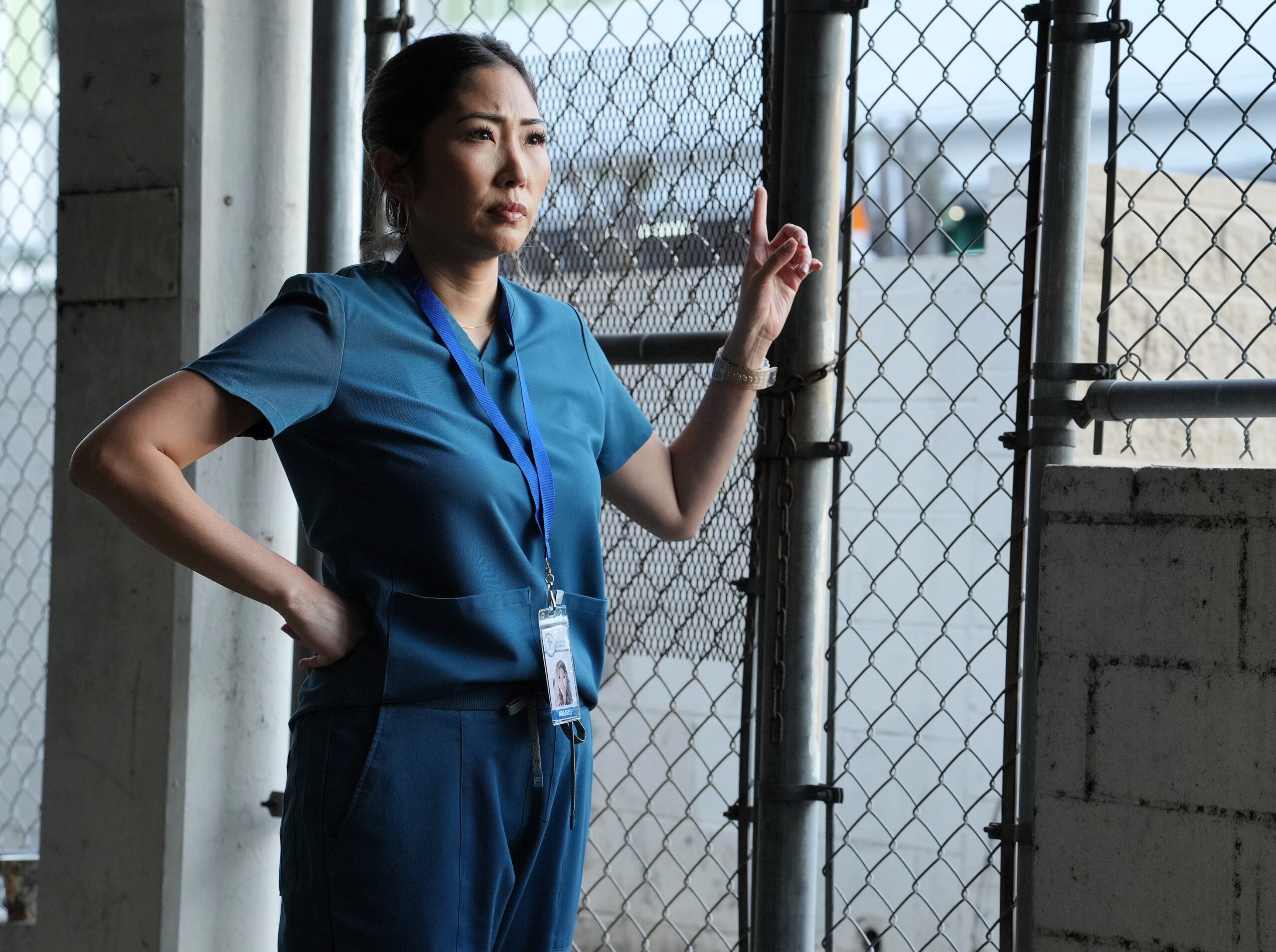
Jelynn Malone as Noa Reyes. Photo by Sthanlee B. Mirador
Jelynn said, “Both of my children got cast in the show to play me as young Noa and then younger Noa, which may have been the most magical thing that’s ever happened to me. When I was up for the show, and I was waiting to find out if I was gonna book Noa, Mark made me wait a week to find out.
“I was just thinking to myself, my Ninang Jojo, who was a nurse who petitioned my family to come to the U.S. She passed away from cancer about 20 years ago. But she’s somebody that I have prayed to my whole career, my whole life. I’m just like, I’ve honored her. I’ve been like, Ninang, help me with everything I’m doing, my roles, my auditions.
“I used to tell her, like, Ninang, bless my performances when I was a dancer. She’s been super connected to me. So when I was waiting for this role, I just thought, oh my God, this is an opportunity for me to honor my Ninang. I believe my Ninang Jojo helped me get this opportunity.
“I went to Mark after filming the first day because I didn’t want to distract him. We were all very busy that day. After we wrapped, I was like, Mark, by the way, where did you get the name Noa for my character?
“He’s like, I haven’t told anybody this – Noa is an acronym for Nurses of America. And in that moment, I was like, exactly. Because I knew that I had to play this to represent our people, and that Ninang Jojo wanted me to play this role to represent Filipino nurses. It all just came full circle in that moment. And it’s just not an accident at all.”
Looking forward, Mark is already working on season 2. “I already wrote the first episode, and I cannot wait,” he said.
“Nurse the Dead” is now available to watch on iWant, with new half-hour episodes released weekly. The pilot episode is available to stream for free. iWant, a Filipino streaming platform, is available on iOS and Android.

Ruben V. Nepales is an LA-based journalist whose honors include nine first prizes from the National Arts & Entertainment Journalism Awards and the Los Angeles Press Club’s Southern California Journalism Awards. He authored “Through a Writer’s Lens,” which won first prize in nonfiction at the 2020-2021 National Arts & Entertainment Journalism Awards. In 2004, he became the first Filipino voter of the Golden Globe Awards, He is a member of the Golden Globe Foundation, one of Hollywood’s biggest philanthropic organizations.
The post ‘Nurse the Dead’ creator, cast reveal 5-season plan and ghost stories appeared first on USNewsRank.