

File, AP Photo
WASHINGTON — The Philippines reaffirmed its commitment to a rules-based international order as it marked the 10th anniversary of the landmark 2016 arbitral ruling that rejected China’s sweeping claims in the South China Sea.
At a reception in Washington, D.C., earlier this week, Philippine Ambassador to the United States Jose Manuel Romualdez said the decade-old decision remains a powerful reminder that international law draws its strength from the collective resolve of nations to uphold it.
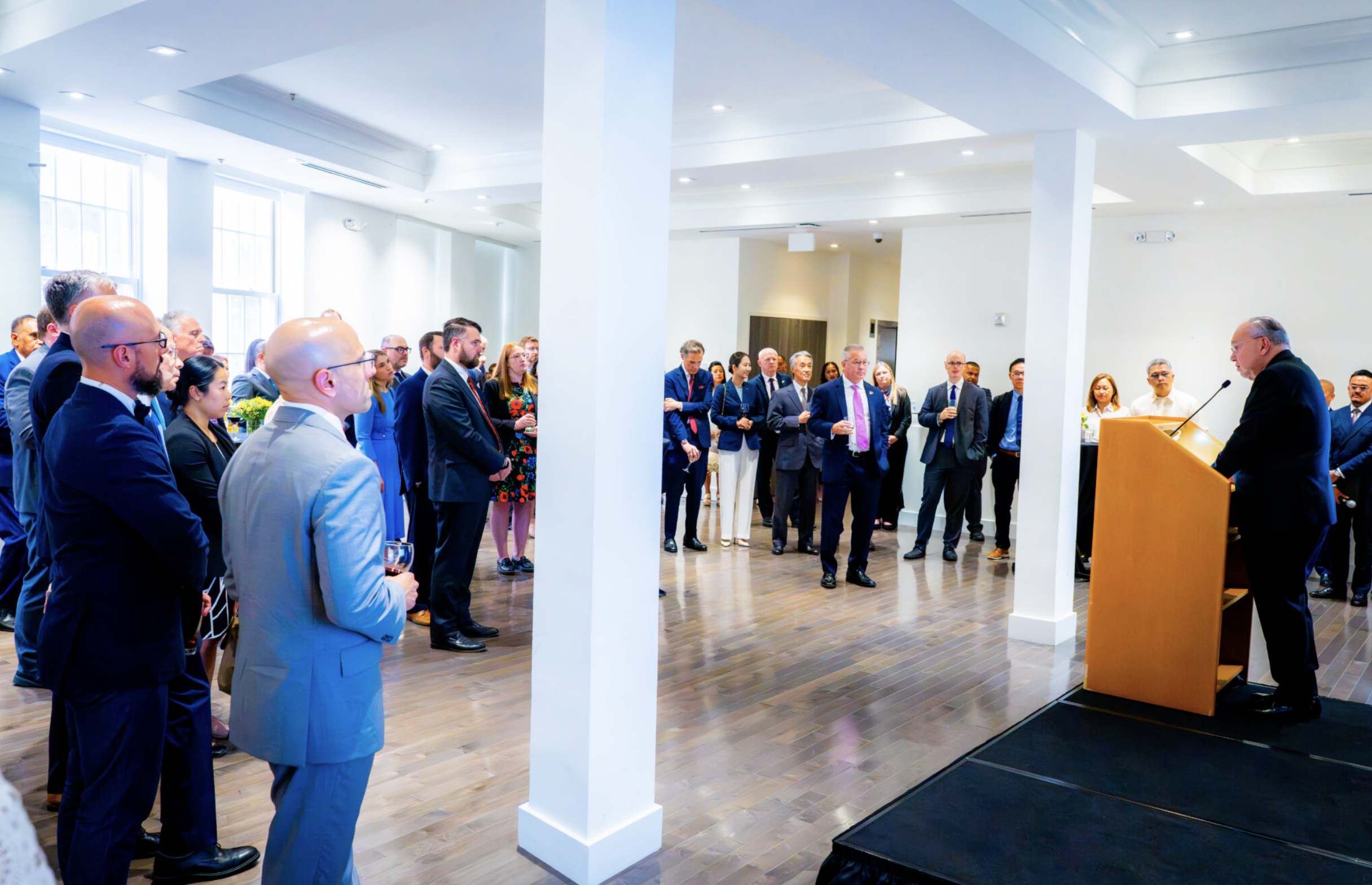
Ambassador Jose Manuel Romualdez (right, at podium) highlights the Philippines’ commitment to the rule of law and peaceful settlement of disputes during his opening remarks at the reception. CONTRIBUTED
“It reminds us that international law derives its strength not from force or coercion, but from the collective resolve of nations to uphold and respect it,” Romualdez said.
“The true measure of a rules-based order is not whether it is convenient, but whether it is defended precisely when it is challenged and when it is applied to all or to no one at all,” he added.
The event brought together US officials and legal and maritime experts, including Assistant Secretary of State for East Asian and Pacific Affairs Michael George DeSombre, Deputy Assistant Secretary Hunt VanderToll and Paul Reichler, who served as counsel for the Philippines in the arbitration case.

Assistant Secretary of State for East Asian and Pacific Affairs Michael George DeSombre reiterates US support for the arbitral award during his remarks. CONTRIBUTED
DeSombre described the arbitral award as the most authoritative basis for the peaceful resolution of South China Sea disputes and underscored the role of the US-Philippines alliance in maintaining regional stability.
Free and open Indo-Pacific
“Together, we are working to safeguard maritime security in the South China Sea and promote a free and open Indo-Pacific,” DeSombre said. “Highlighting the importance of the arbitral award is a testament to our shared interests and vision for the Indo-Pacific.”
The ruling was issued on July 12, 2016, by an arbitral tribunal constituted under the United Nations Convention on the Law of the Sea, or UNCLOS. The Permanent Court of Arbitration in The Hague served as the registry for the case.
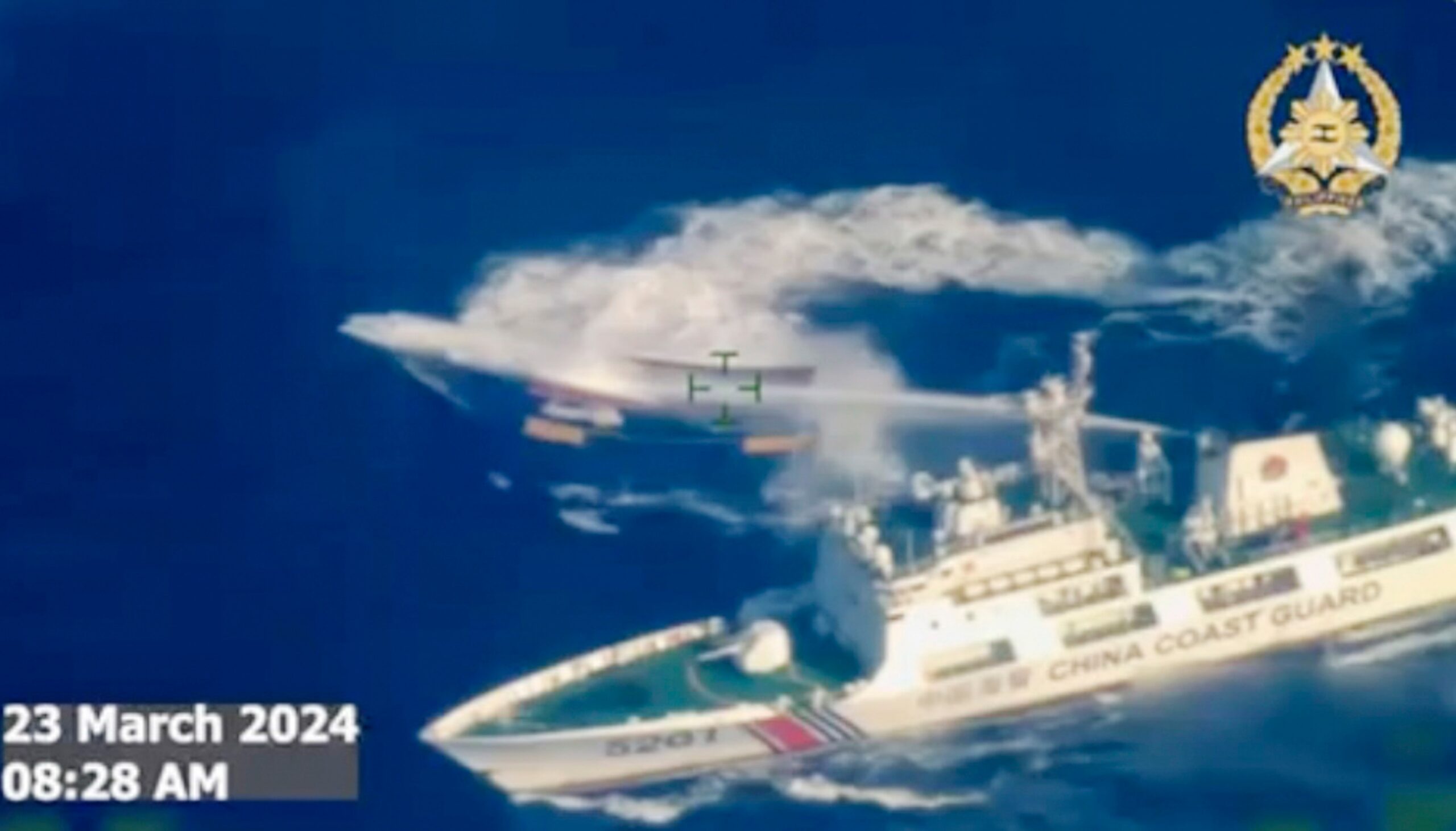
FILE – In this image made from video provided by the Armed Forces of the Philippines, a Chinese coast guard ship uses water cannon on a Philippine resupply vessel Unaizah May 4 as it approaches Second Thomas Shoal, locally called Ayungin shoal, at the disputed South China Sea on March 23, 2024. (Armed Forces of the Philippines via AP, File)
The case, initiated by the Philippines in 2013, challenged the legal basis of China’s expansive maritime claims and certain Chinese activities in the South China Sea. China refused to participate in the proceedings.
Challenging China’s maritime claims
In its landmark decision, the tribunal found no legal basis for China to claim historic rights to resources in waters within its so-called nine-dash line beyond maritime entitlements allowed under UNCLOS.
The tribunal also addressed the legal status of disputed maritime features and found that China had violated the Philippines’ sovereign rights in parts of its exclusive economic zone.
The tribunal did not rule on sovereignty over islands or delimit a maritime boundary between the Philippines and China.
Beijing has repeatedly rejected the decision as “null and void” and has continued to assert its claims in much of the South China Sea. A decade after the ruling, confrontations between Philippine and Chinese vessels have kept the maritime dispute at the center of regional security concerns.
‘Right is might’
University of the Philippines professor Jay Batongbacal, director of the UP Institute for Maritime Affairs and Law of the Sea, said the arbitration has helped galvanize Filipinos around the South China Sea issue despite the challenges facing Manila.

UP professor Dr. Jay Batongbacal | CONTRIBUTED
“Our people have never been so united around a single foreign policy issue,” Batongbacal said. “The Arbitration has become a catalyst for national awareness and national unity, and that shows us the power of this ideal that ‘right is might.’”
Legal and moral victory
De La Salle University associate professor Charmaine Misalucha-Willoughby said the ruling represented a legal and moral victory for the Philippines but warned that defending the rule of law remains an ongoing effort.

De La Salle University professor Charmaine Misalucha-Willoughby | CONTRIBUTED
“It bears repeating that in a world of great powers, international law remains a critical tool that small and medium powers like the Philippines can use to protect and advance their national interests,” she said.
“It is up to us to continue upholding rules and norms that ensure the functions of international relations.”
International support
The anniversary comes as the ruling continues to draw international support. Fourteen countries and the European Union reaffirmed the award on its 10th anniversary and rejected sweeping maritime claims inconsistent with international law, while China maintained its opposition to the decision.
The Philippines is commemorating the anniversary under the theme, “A Decade Hence: The Enduring Promise of Peaceful Dispute Settlement.”
The post PH marks 10 years of South China Sea ruling: ‘Right is might’ appeared first on USNewsRank.